Engineering education plays an important role in developing technical knowledge and practical skills among students. It connects science, mathematics, and technology in a way that helps learners understand how systems are designed, built, and improved. In many parts of India, engineering institutions provide structured academic programs that support both theoretical learning and practical application.
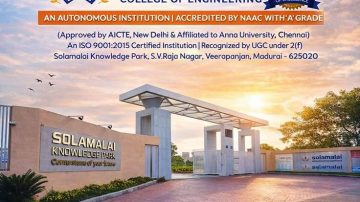
One such institution is Solamalai College of Engineering located in Madurai. Like many technical colleges in the region, it contributes to higher education by offering academic programs that focus on engineering concepts, laboratory learning, and student development.
Importance of Engineering Studies
Engineering studies help students understand how technology works in real life. From transportation systems to computer software, engineering knowledge is used in many areas of everyday life. Because of this wide range of applications, engineering programs are designed to give students a strong foundation in both scientific theory and practical skills.
During the early stages of an engineering degree, students usually study fundamental subjects such as mathematics, physics, and basic engineering principles. These subjects help them develop logical thinking and analytical abilities. Once the foundation is established, students move on to specialized topics related to their chosen field.
Academic Structure and Subjects
Engineering courses are generally organized in a structured format across several semesters. Each semester introduces new subjects that gradually increase in complexity. Students attend lectures, complete assignments, and participate in laboratory sessions.
For example, computer science students may study programming languages, algorithms, and data management systems. Mechanical engineering students may focus on machine design, manufacturing techniques, and thermodynamics. Civil engineering programs may include subjects such as structural analysis, construction technology, and environmental engineering.
In addition to technical subjects, many engineering programs include courses related to communication skills, teamwork, and professional development. These subjects help students prepare for collaborative work environments where engineers often interact with professionals from different backgrounds.
Laboratory Learning and Technical Practice
Laboratory sessions are an important part of engineering education. Through experiments and technical exercises, students can observe how theoretical concepts work in real conditions. Laboratories allow students to test ideas, analyze results, and gain practical experience with equipment and software tools.
Engineering laboratories may include computer labs, electronics labs, mechanical workshops, and civil engineering testing facilities. These spaces provide opportunities for hands-on learning and experimentation. Practical exposure helps students understand the design process and improves their ability to solve technical problems.
Project-Based Learning
Many engineering programs encourage project-based learning. Students often work individually or in groups to develop solutions for technical challenges. Projects may involve designing software applications, building small mechanical models, or conducting research related to engineering concepts.
Final year projects are especially significant because they allow students to apply the knowledge they have gained throughout their studies. These projects often require planning, experimentation, and detailed documentation. Through this process, students develop research and analytical skills that are valuable in professional careers.
Learning Resources and Campus Facilities
Engineering colleges usually provide several learning resources to support academic growth. Libraries contain textbooks, reference materials, and technical journals that help students deepen their understanding of complex subjects. Many institutions also provide digital learning platforms and internet-based resources that allow students to explore additional information related to their studies.
Computer centers, seminar halls, and discussion spaces are also common features of engineering campuses. These facilities support group learning, academic discussions, and technical presentations. Access to these resources helps students explore new ideas and expand their technical knowledge.
Student Development Activities
Apart from academic studies, engineering institutions often encourage students to participate in extracurricular activities. Technical clubs, workshops, and seminars provide opportunities to learn about emerging technologies and industry trends. Students may also take part in sports events, cultural programs, and community activities.
These activities help students develop leadership skills, teamwork abilities, and confidence. Participation in events and competitions also encourages creativity and innovation, which are important qualities for engineers.
Engineering Education in Madurai
Madurai has developed into a well-known educational center in Tamil Nadu. The city hosts several institutions that offer engineering and management programs. Students from different parts of the state and nearby regions come to Madurai to pursue higher education.
Because of this growing academic environment, many students begin their search by looking for the best engineering colleges in madurai to understand the options available for engineering studies. The presence of multiple institutions, experienced faculty members, and technical facilities contributes to the development of engineering education in the region.
Conclusion
Engineering education combines theoretical knowledge, practical experience, and innovative thinking. Through structured academic programs, laboratory learning, and project work, students gain the skills required to understand and solve complex technical problems.
Institutions such as Solamalai College of Engineering are part of the educational landscape that supports engineering studies in Madurai. By providing academic programs and learning resources, engineering colleges help students build a strong foundation for careers in technology, research, and industrial development.